
Introduction (— a general perspective of Barça)
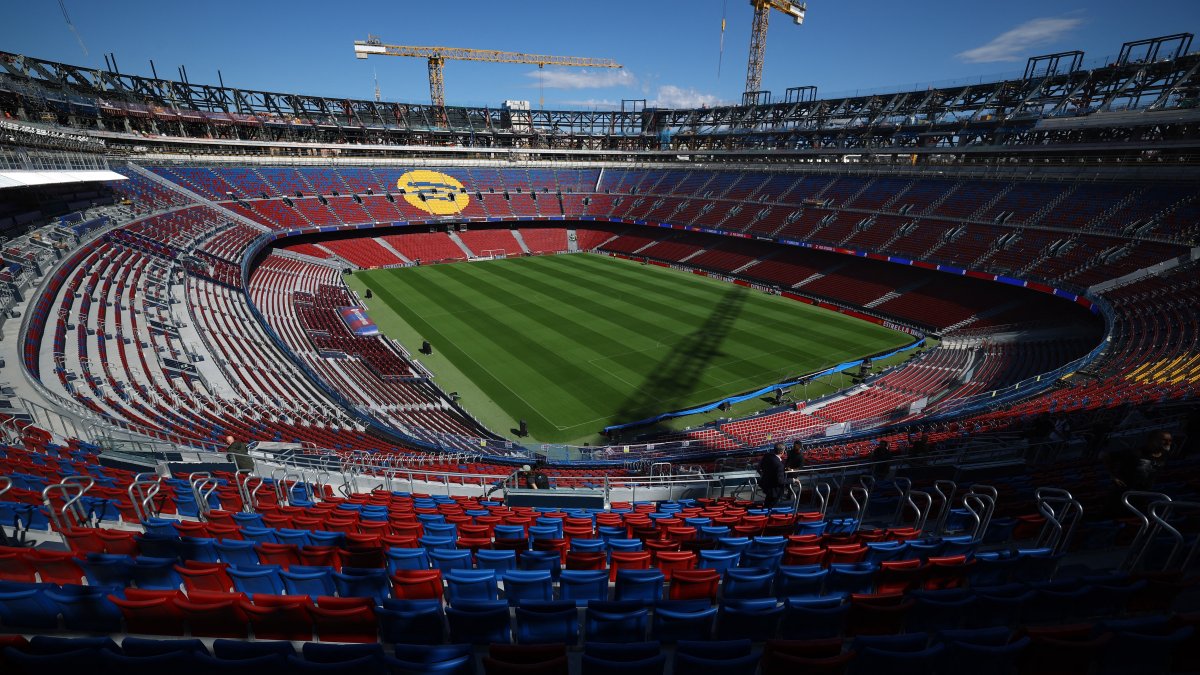
Few sporting institutions combine regional identity, tactical innovation and global fandom as visibly as Futbol Club Barcelona. Founded in 1899 in a cosmopolitan port city, Barça grew from a small expatriate-led football group into a mass membership club whose motto — Més que un club — expresses pride in cultural identity as much as sporting ambition. Camp Nou, the singing Kop, La Masia’s classrooms and training pitches, and a style of play built on possession and technique have all shaped Barcelona’s public image: a footballing philosophy that prizes collective intelligence, ball mastery and youth development.
Barça’s significance lies in the way sport, culture and politics have overlapped in Catalonia. The club has carried local language, identity and civic pride through decades of political change; that social role amplified matches into symbolic events long before global broadcast turned every El Clásico into a worldwide spectacle. Tactically, Barcelona has repeatedly led football’s conversations: Rinus Michels and Johan Cruyff imported and adapted total football concepts, Cruyff then forged a coherent academy-to-first-team model, and Pep Guardiola’s teams (2008–2012) took those principles to a peak — possession, positional play and pressing that reshaped modern coaching.
Sporting success has followed philosophy: Barcelona is one of Europe’s most decorated clubs, with dozens of domestic and continental honours. But Barça’s story also includes structural challenges — the fiscal pressures of modern football, governance disputes, and the need to rebuild after the departure of long-serving stars. In parallel, the club’s women’s section has risen to become one of the world’s elite teams, matching the men’s club ambition with investment and trophies.
Inception, Origin, Founder, First Training Ground
FC Barcelona was founded on 29 November 1899 when Swiss enthusiast Joan (Hans) Gamper placed a notice in a sporting paper seeking players. Eleven men met at the Gimnàs Solé and agreed to form Foot-Ball Club Barcelona; Walter Wild was the club’s first president and Gamper its driving force in the early decades. Barça’s early identity was shaped by a mix of Catalan and foreign players — a sign of Barcelona’s port-city cosmopolitanism.
Early matches took place on various local fields; Barcelona later had several stadia before Les Corts became the main ground in the 1920s. In 1957 Barça moved to the new Camp Nou, which would become the club’s long-term home and one of Europe’s most iconic arenas. Over time, the club developed formal training facilities and an academy system (La Masia) that became central to Barça’s model of producing and integrating homegrown talent.
Club Structure — Governance, Membership Model & Sporting Organisation
Barcelona operates under a member-owned (soci) model: the club is a registered association run by an elected president and board answerable to tens of thousands of voting members (socis). That democratic model makes presidential elections central political moments that shape strategy, commercial agreements and sporting direction. Recent presidents have overseen major projects including stadium renovation and financial restructuring.
Beneath the democratic layer, FC Barcelona functions like a professional sports organisation: a CEO and executive committee manage finance, commercial activities, global partnerships, while the sporting department handles recruitment, medical, analytics and academy operations. La Masia and the Ciutat Esportiva Joan Gamper (the club’s training complex) sit at the heart of operational football development.
Coaches & Managerial Eras — Who Shaped Barça’s Football Identity
Barcelona’s coaching lineage has included revolutionary figures who defined not only club tactics but modern football:
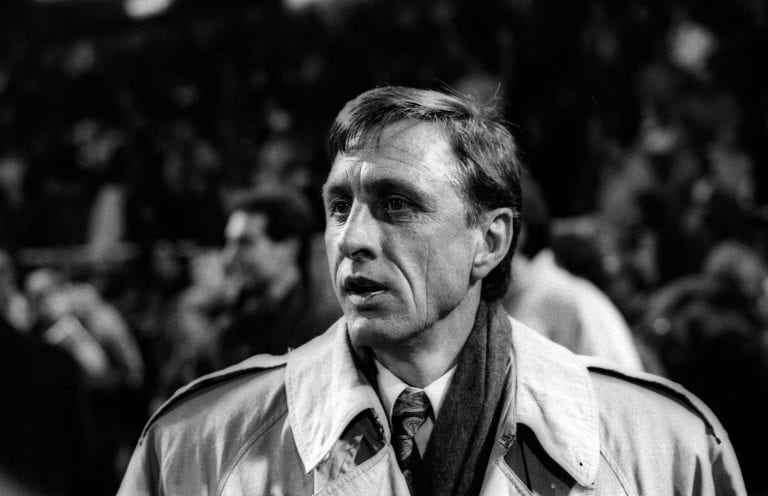
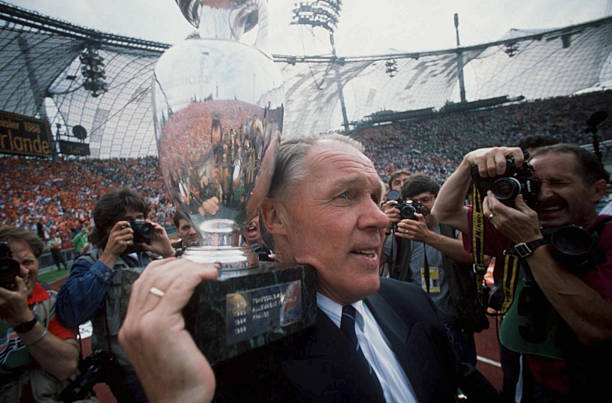
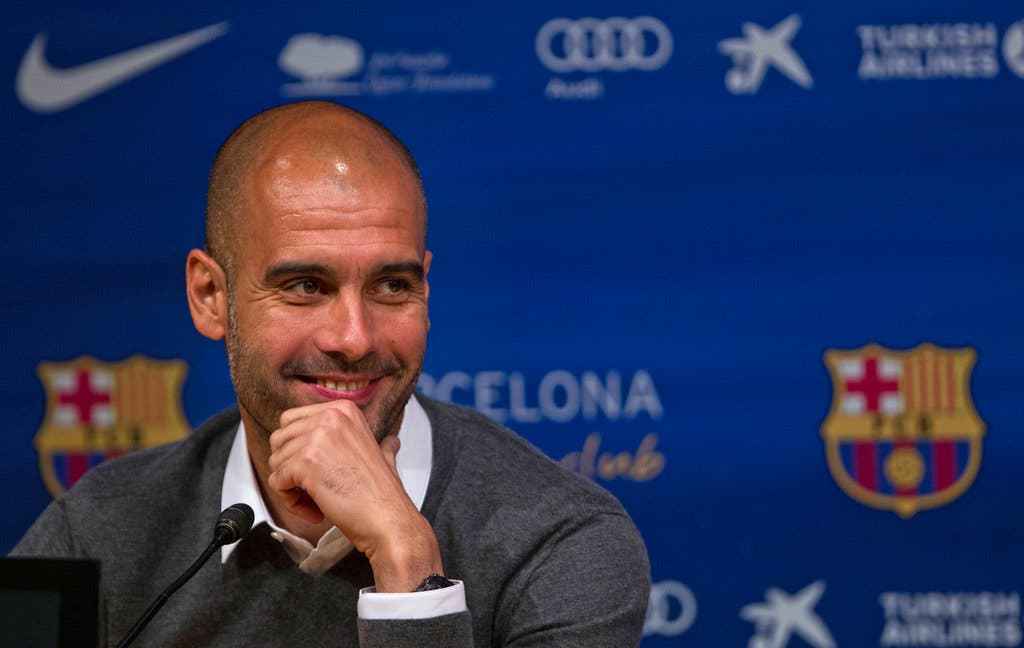
- Rinus Michels (1971–1975; 1977–1978) — introduced total football concepts to Barca, influencing later philosophical directions.
- Johan Cruyff (1988–1996) — architect of the “Dream Team”; his coaching installed the possession-based philosophy, promoted La Masia graduates, and delivered Barça’s first European Cup (1992). Cruyff’s ideas became institutional at the club.
- Frank Rijkaard (2003–2008) — reunited Ronaldinho and youthful talent, winning the 2006 Champions League.
- Pep Guardiola (2008–2012) — Guardiola’s teams arguably represent Barça’s high-water mark: a blend of La Masia graduates and tactical perfection that produced multiple LaLiga and Champions League trophies and global acclaim.
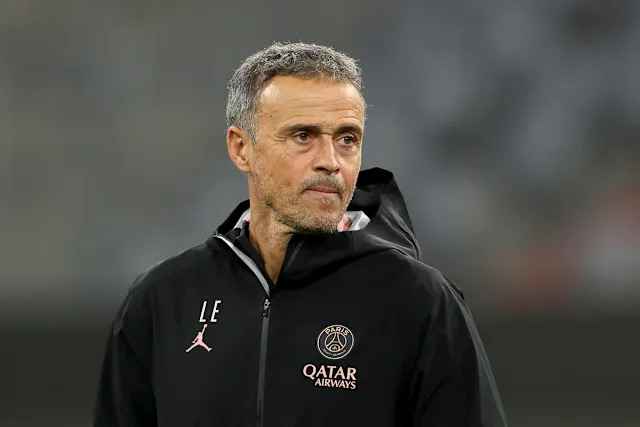
- Luis Enrique (2014–2017) — presided over the 2015 treble and a pragmatic evolution of Barca’s play.
- Recent years (Valverde, Setién, Koeman, Xavi, and the modern coaching cycle) reflect a period of transition and rebuild after financial strain and squad overhaul.
A complete chronological list of permanent managers and caretakers is maintained by the club archives and reference databases.
Best Players to Ever Feature for Barcelona (including captains)
Barcelona’s greatest players combine trophies, individual honours and cultural resonance. A concise selection:
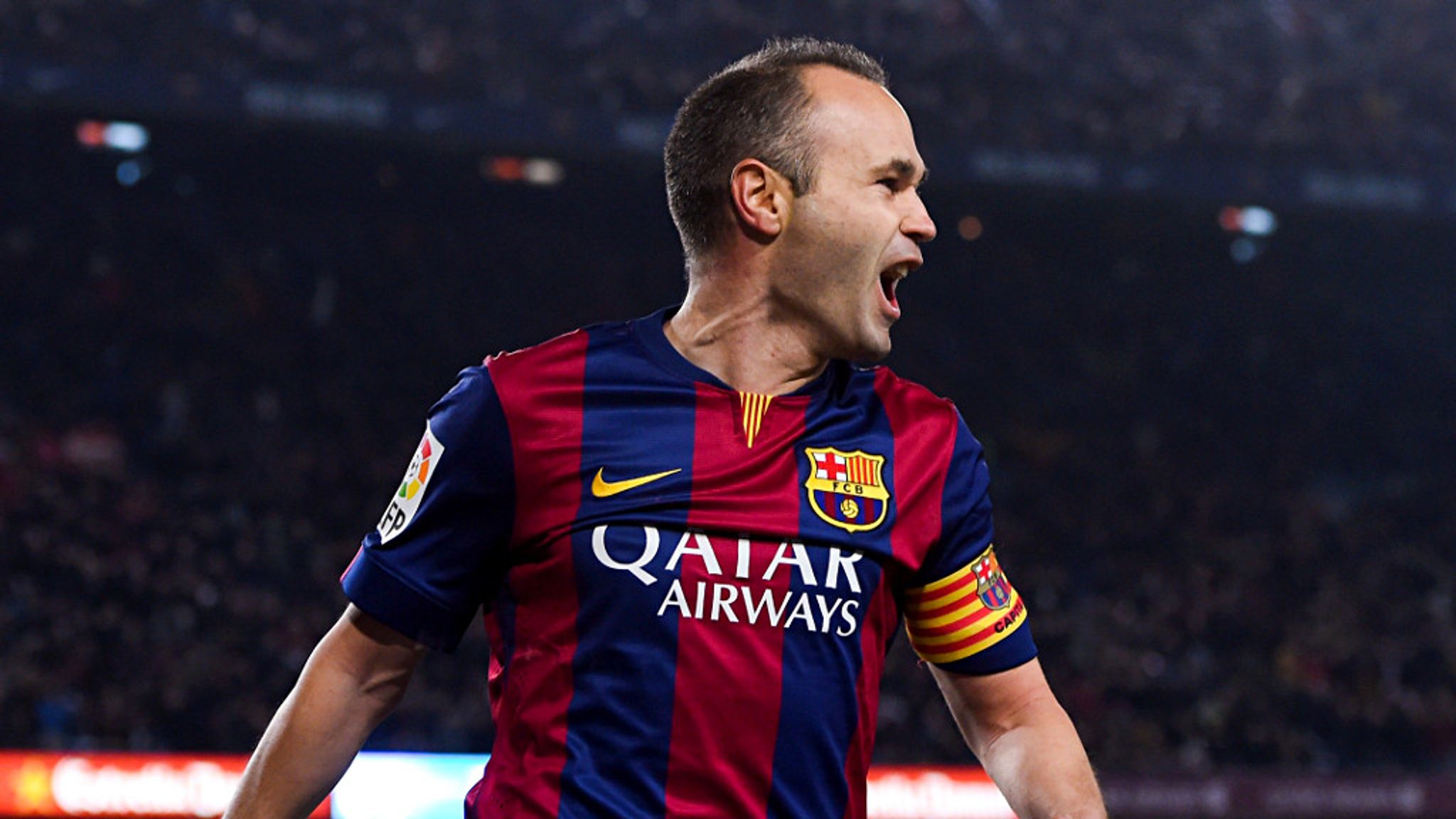
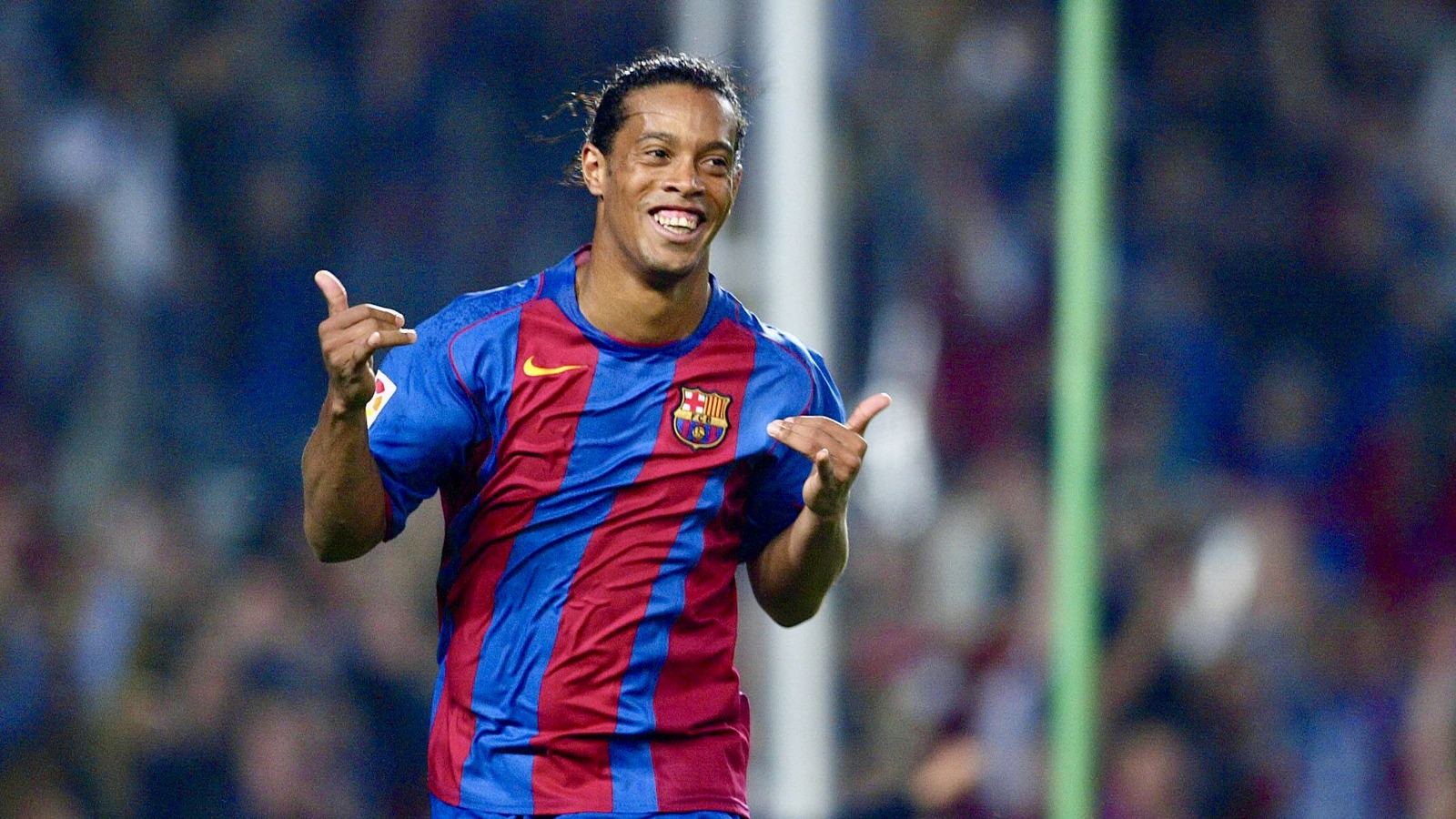
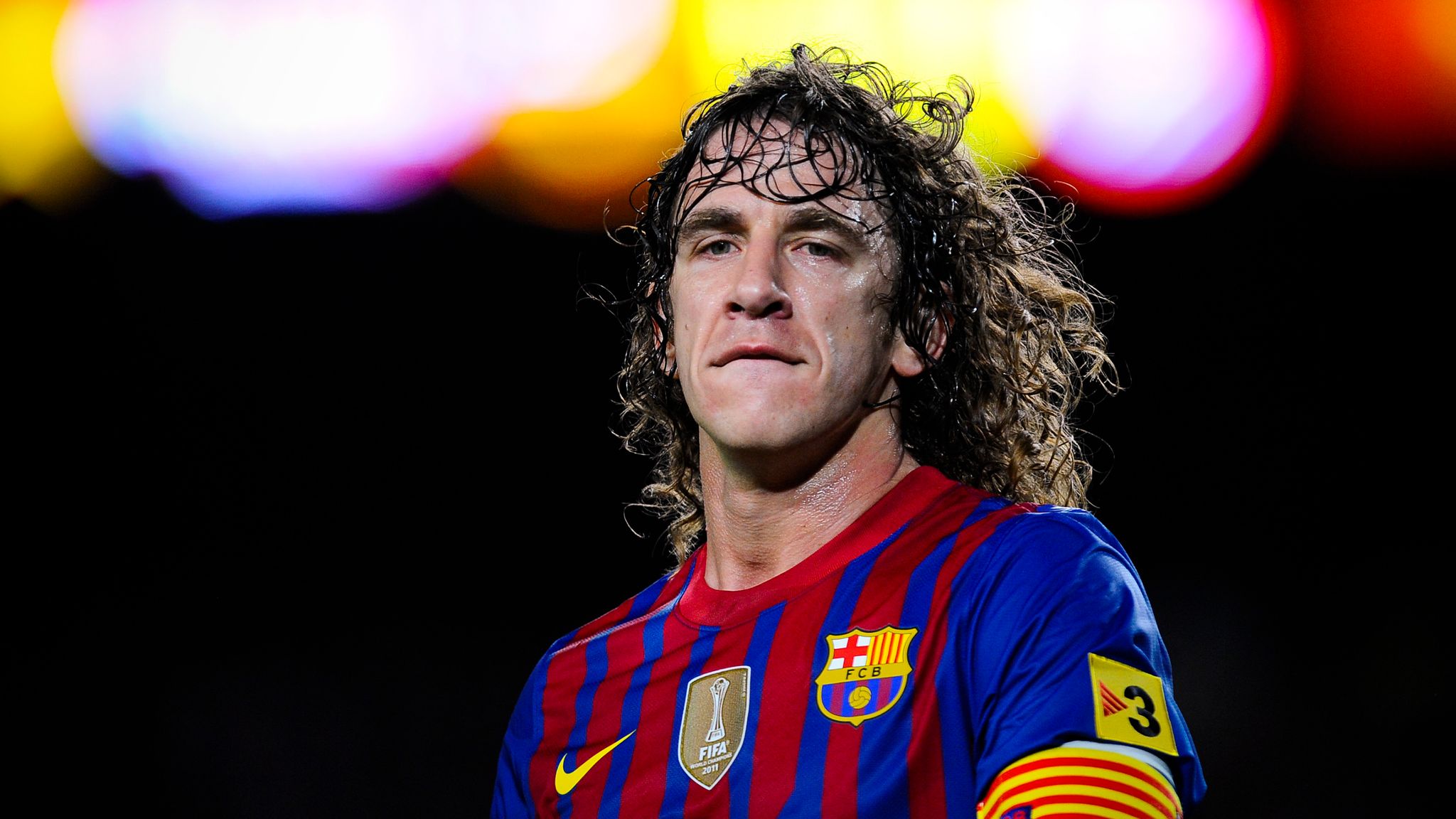
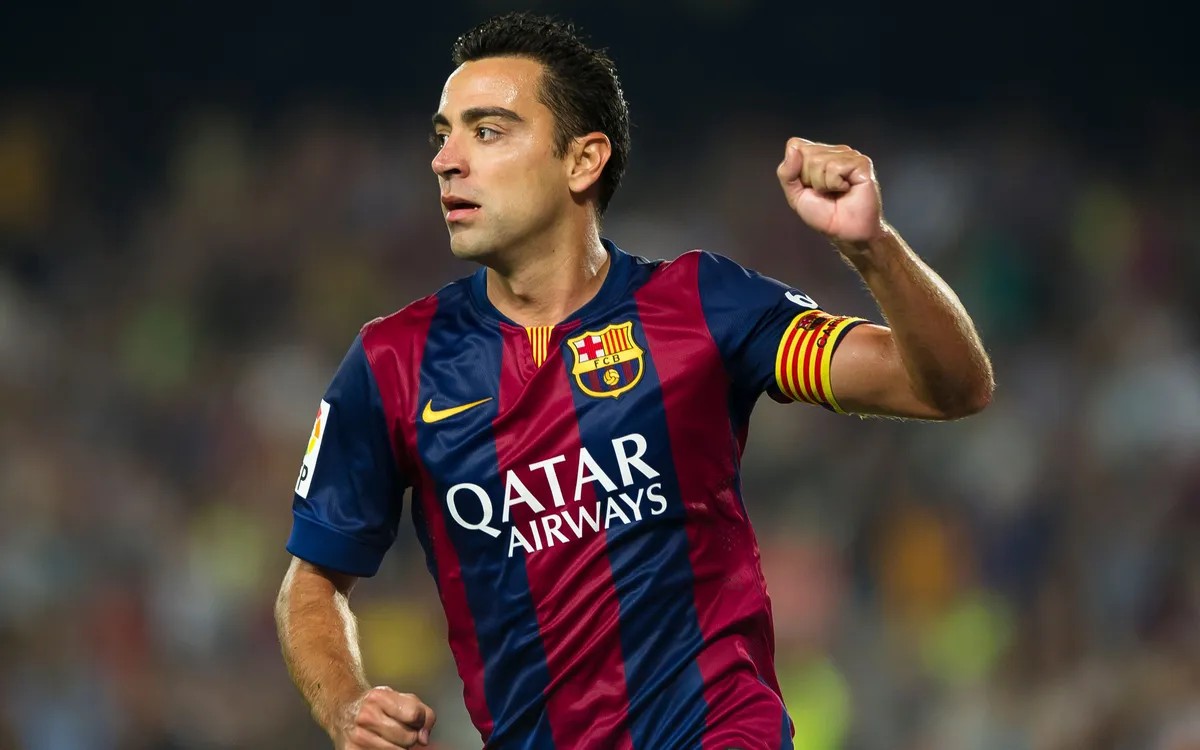
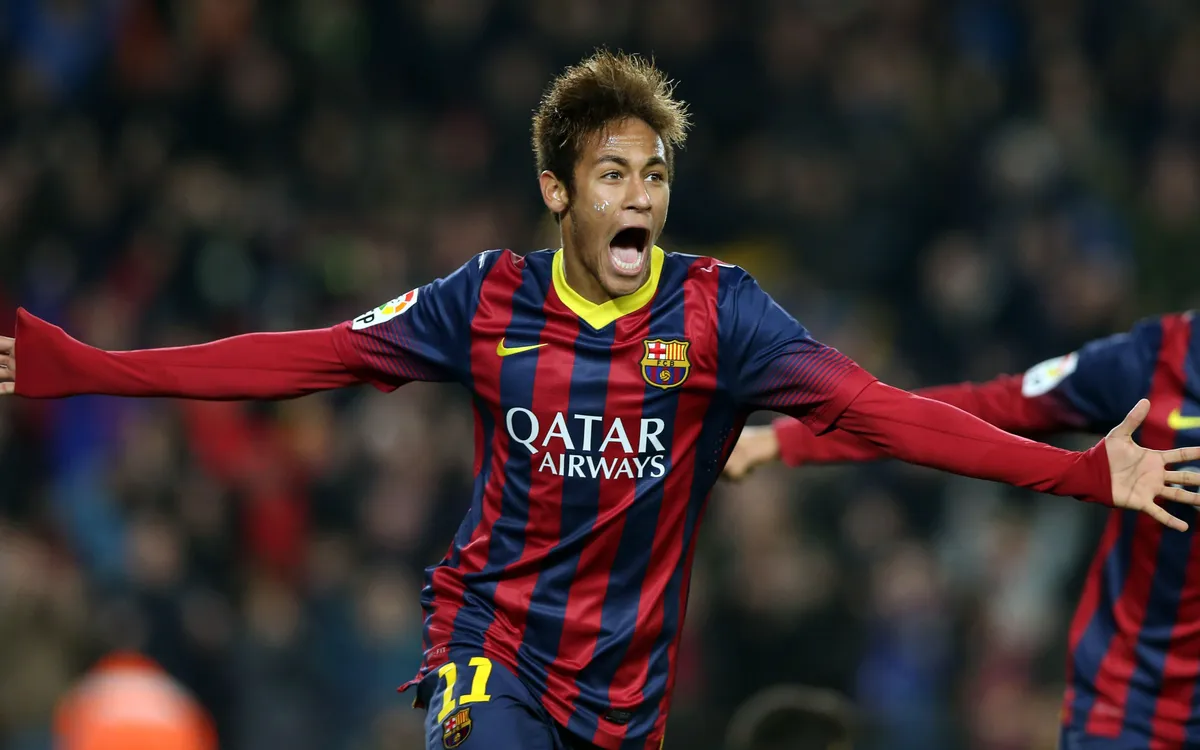
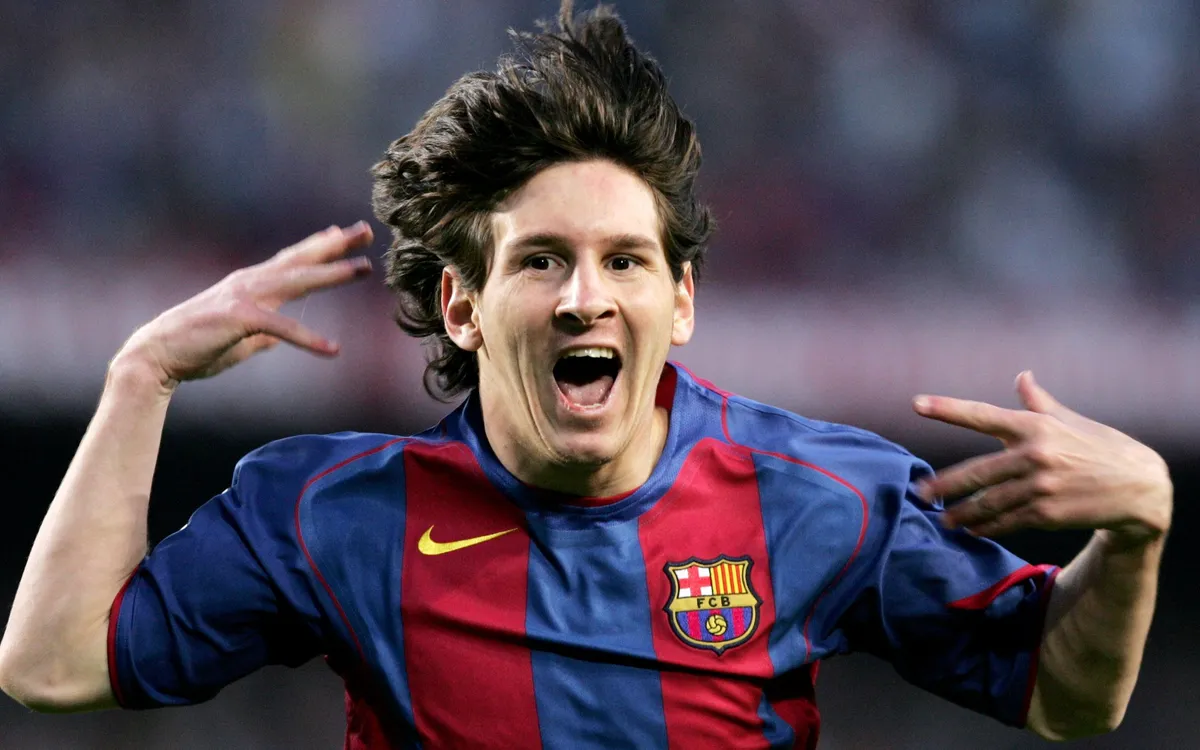
- Lionel Messi — Barcelona’s all-time leading scorer and Ballon d’Or record-holder during his Barca years; central to the club’s greatest modern achievements.
- Johan Cruyff — player and coach; his influence transcends statistics.
- Xavi Hernández, Andrés Iniesta — midfield architects of the Barca/Spain possession era.
- Carles Puyol — emblematic captain and defensive leader.
- Ronaldinho — rekindled Barca’s joy and global profile in the mid-2000s.
- Samuel Eto’o, Neymar, Luis Suárez — major attacking figures across trophy seasons.
- Sergio Busquets, Gerard Piqué, Jordi Alba — modern core stabilisers.
Captains (notable): Josep Samitier and later Carles Puyol, Xavi (vice/captain roles), Lionel Messi (captain in later years), Sergio Busquets and current leaders — captains reflect era changes from local figures to global stars. The club’s museum and official records list exact captaincy years and appearances.
Club Challenges — Political, Financial & Sporting Pressures
Barça’s history includes structural and existential tests:
- Political context: During the Franco dictatorship, Catalan language and symbols were suppressed; Barça became a potent civic symbol of Catalan identity, which complicated its relationship with state authorities and shaped fan sentiment.
- Financial crises: The late 2010s and early 2020s saw mounting debt driven by high wages, transfer fees and stadium project costs; the club undertook restructuring, contract renegotiation, and a strategy of balanced squad renewal.
- Post-star rebuild: The departure of Lionel Messi in 2021 precipitated sporting, commercial and identity challenges requiring a rebuild from academy and fresh signings.
- Governance turbulence: Presidential disputes and strategic disagreements occasionally undermined continuity, forcing periodic reorganisations.
FC Barcelona’s institutional response prioritized debt reduction, youth integration and controlled recruitment while pursuing long-term stadium and revenue projects.
Post-War Challenges (clarity note)
Barcelona, like other European clubs, faced wartime disruption and post-war rebuilding. During the Franco era, political pressures affected regional expression and institutional life in Catalonia; the club’s role in civic identity became more pronounced. For clarity: modern club histories treat wartime and political repression as distinct social contexts; referencing the Holocaust here would be inaccurate and unrelated to the club’s institutional story. Barcelona’s post-war recovery emphasised local recruitment and stadium consolidation before later international expansion.
Transfer Records — Major Signings & Big Sales
Barcelona’s transfer record combines marquee purchases and headline sales:
- Biggest sale: Neymar Jr. — transferred to Paris Saint-Germain in 2017 for €222 million; this remains one of world football’s landmark deals.
- Notable buys: Over the last decade Barca invested heavily in signings such as Philippe Coutinho, Ousmane Dembélé, Antoine Griezmann, Frenkie de Jong and Raphinha — strategic but often expensive attempts to rebuild the squad post-Messi era.
Barcelona’s transfer policy balances La Masia promotion with opportunistic signings; sales have sometimes been used to rebalance the books while retaining competitiveness.
Club Overall Achievements — Exact Title Counts (authoritative, up to mid-2025)
Below are Barça’s official, exact first-team senior honours as recorded by the club and major football authorities (counts accurate to mid-2025):
- LaLiga (Spanish first division): 28 titles.
- Copa del Rey: 32 titles.
- UEFA Champions League / European Cup: 5 titles (1991–92, 2005–06, 2008–09, 2010–11, 2014–15).
- UEFA Cup Winners’ Cup: 4 titles.
- UEFA Super Cup: 5 titles.
- FIFA Club World Cup: 3 titles (2009, 2011, 2015).
- Supercopa de España: 15 titles.
These counts are taken from the club’s official honours records and corroborated by major football authorities.
All Trophies Won (comprehensive list)
Barcelona’s official major trophies include:
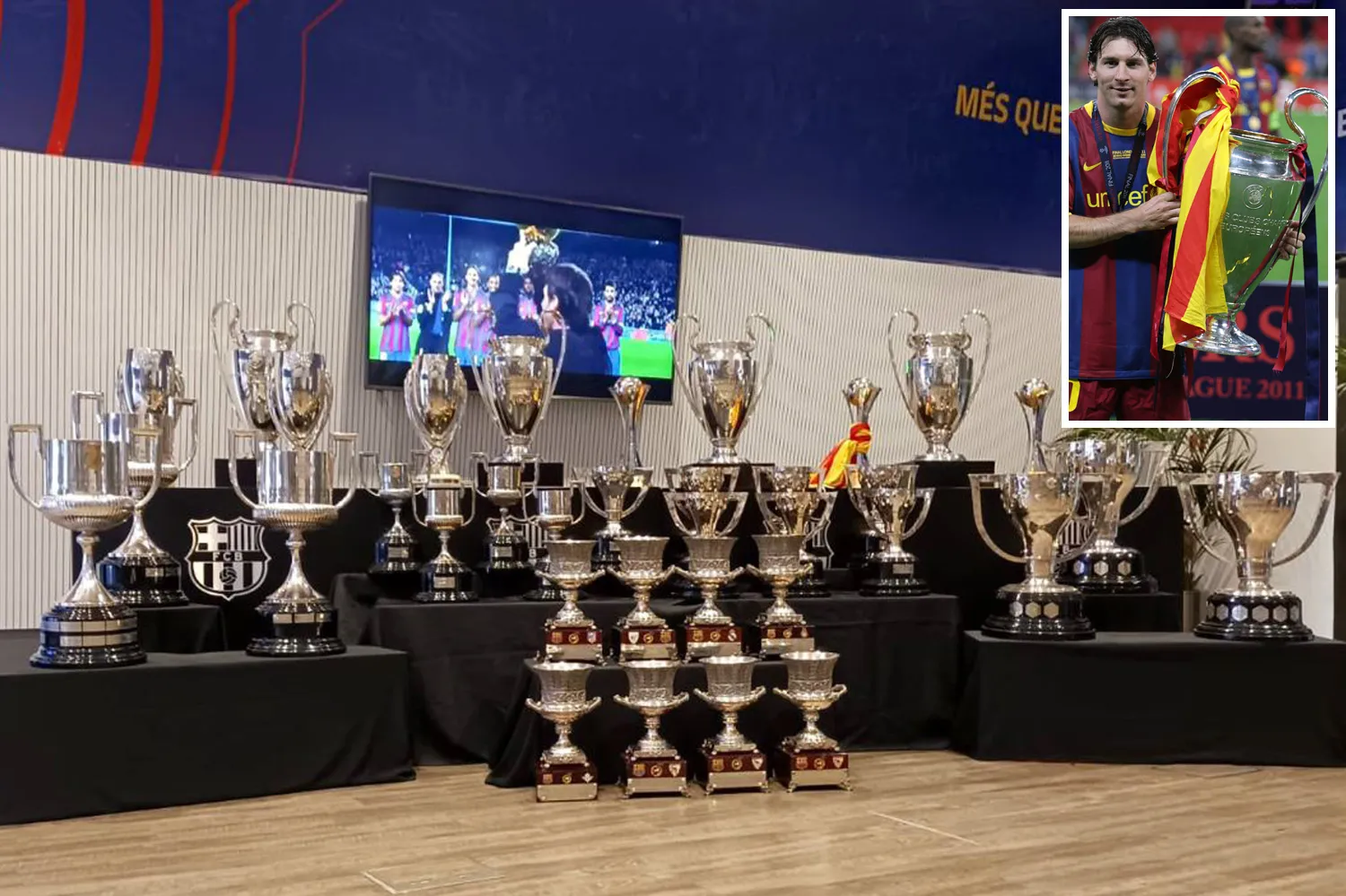
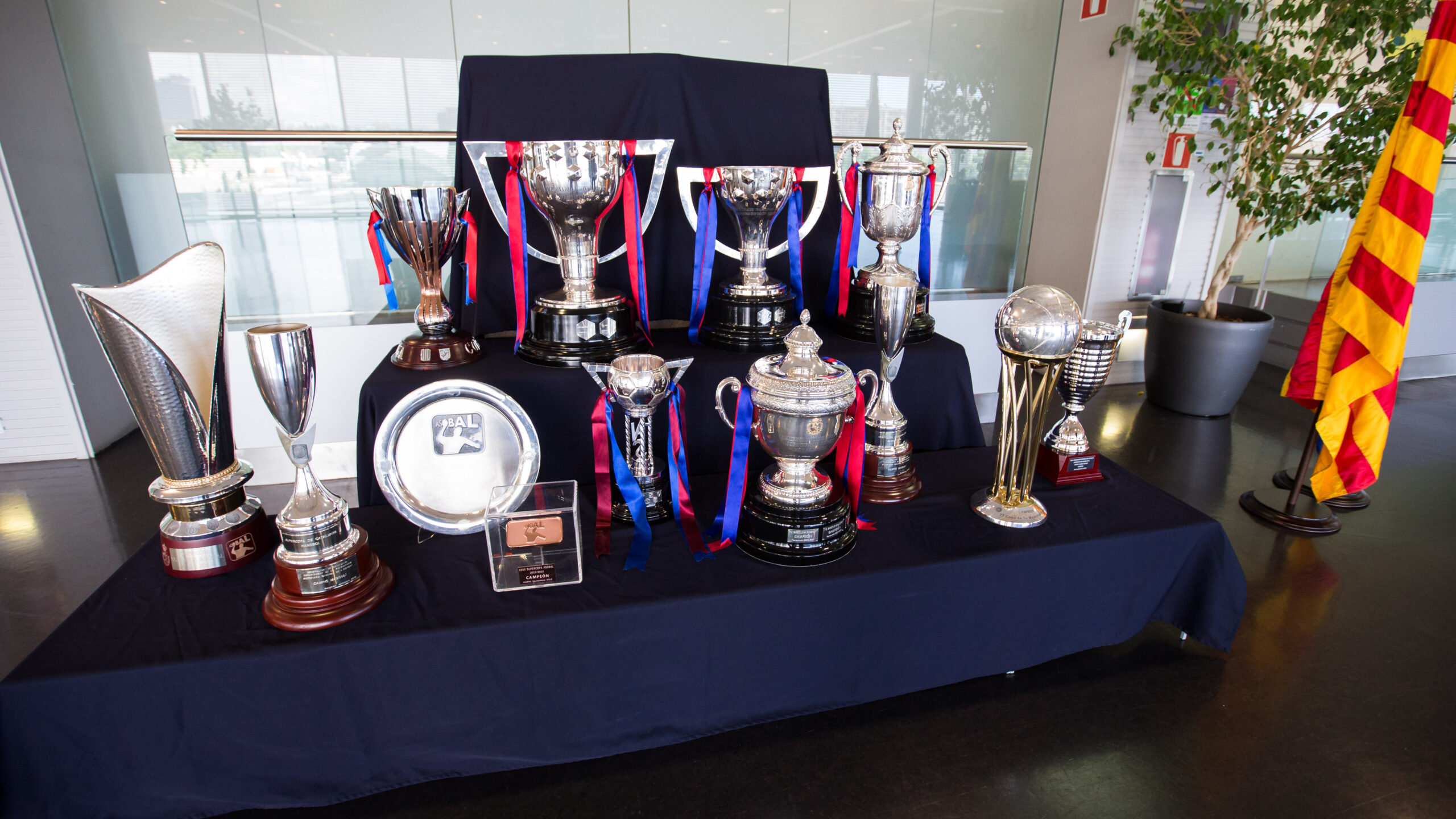
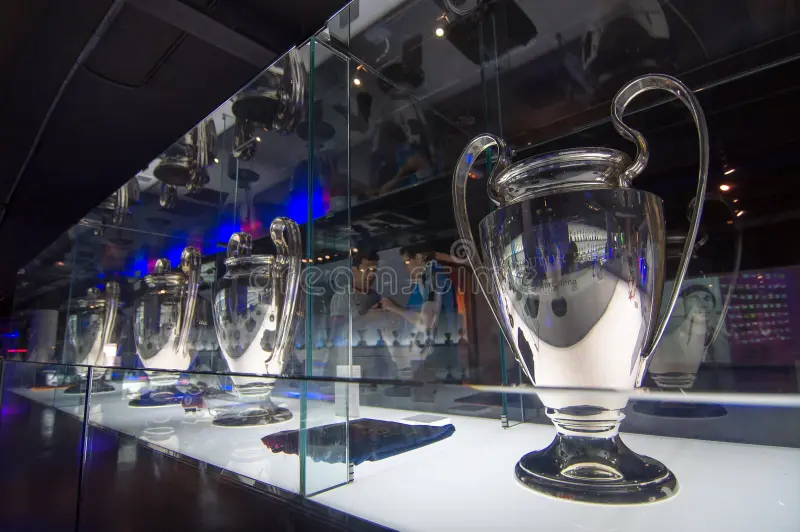
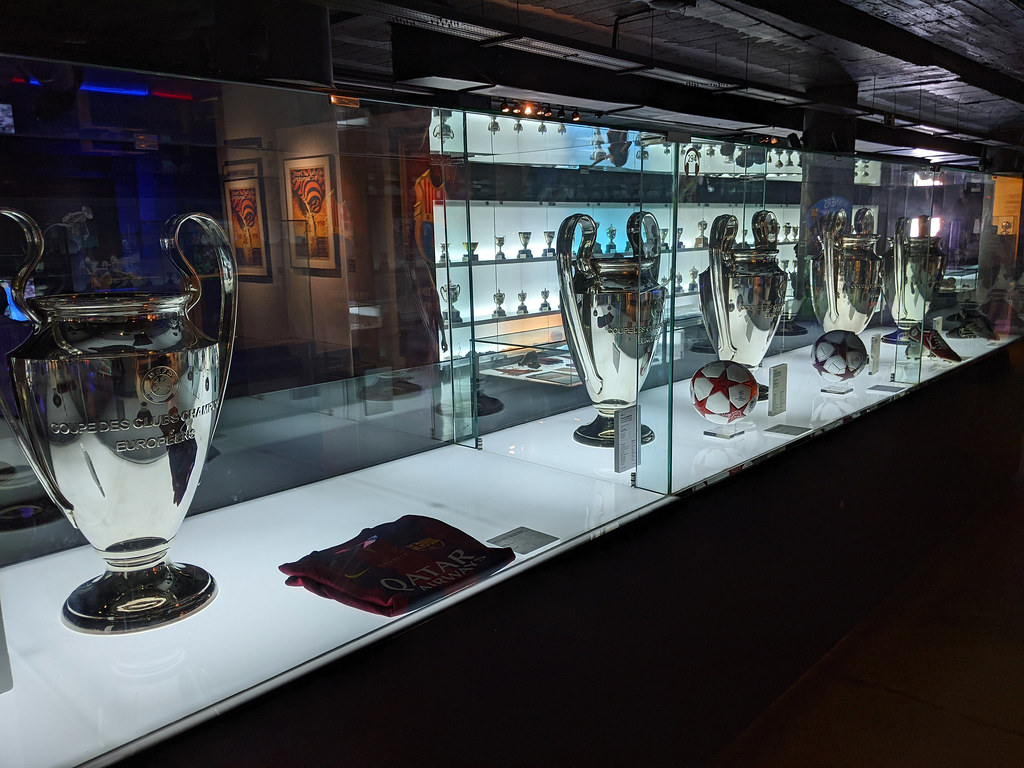
- LaLiga: 28 (most recent 2024–25).
- Copa del Rey: 32 (most recent 2024–25).
- UEFA Champions League: 5.
- UEFA Cup Winners’ Cup: 4.
- UEFA Super Cup: 5.
- FIFA Club World Cup: 3.
- Supercopa de España: 15.
- Inter-Cities Fairs Cup / Latin Cup / regional tournaments: historical continental and regional trophies form part of the wider honours list recorded by the club.
Home Ground & Training Centre
Camp Nou (Spotify Camp Nou) — Barça’s home since 1957. Camp Nou is one of the largest football stadiums in Europe by capacity and remains central to club identity. From 2023–2025 the stadium underwent a major renovation as part of the Espai Barça project, with phased re-openings allowing partial crowds in 2025; final project capacity targets exceed 100,000 but partial occupancy was used during renovation phases.
Ciutat Esportiva Joan Gamper & La Masia — Barcelona’s training and academy base, central to player development, medical care and integration between youth and first team. La Masia’s role in producing world-class talent over decades is well documented and remains key to Barca’s strategy.
All Coaches and Their Era (expanded chronology & highlights)
A fuller managerial chronology emphasises who shaped key tactical phases:
- Early decades: local coaches and administrators as football professionalised.
- Rinus Michels — introduced modern tactical rigour.
- Johan Cruyff (1988–1996) — “Dream Team,” institutionalising playing philosophy.
- Louis van Gaal (1997–2000; 2002–2003) — restructured, brought discipline and youth integration.
- Frank Rijkaard (2003–2008) — consolidated post-Ronaldinho rejuvenation; UCL 2006.
- Pep Guardiola (2008–2012) — peak era of possession football, multiple domestic and European titles.
- Luis Enrique (2014–2017) — 2015 treble.
- Ernesto Valverde, Quique Setién, Ronald Koeman, Xavi Hernández, and others — transitional and rebuilding coaches in late 2010s–2020s.
Each era is associated with strategic shifts: Cruyff’s institutional philosophy, Guardiola’s tactical perfection, Luis Enrique’s balancing of tiki-taka with directness, and later efforts to reassert identity post-Messi. A manager list with dates and honours is available in club archives.
Club Owners & Presidency — The Soci Model in Practice
Barcelona is not a privately owned club in the modern oligarchic sense; it is an association governed by member elections. Presidents (Joan Gamper, Narcís de Carreras, Josep Lluís Núñez, Josep Maria Bartomeu, Joan Laporta and others) have influenced projects and direction. The presidency combines sporting choice (manager appointments, director appointments) with major commercial decisions (stadium projects, sponsorships) — hence electoral cycles strongly influence club policy. Joan Laporta’s re-election in 2021 saw a return to policies emphasizing sporting rebuilding and stadium commercialisation.
FC Barcelona Femení — Growth, Success & Records
Barcelona Femení has become a global benchmark in women’s football:
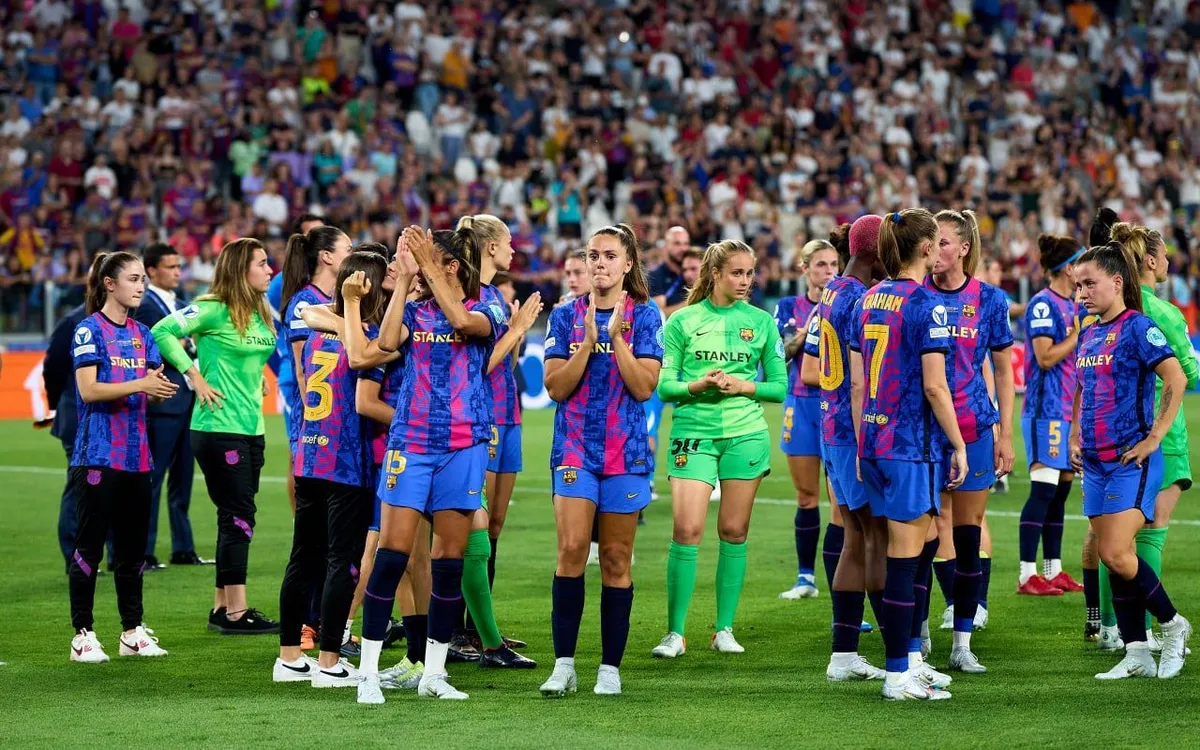
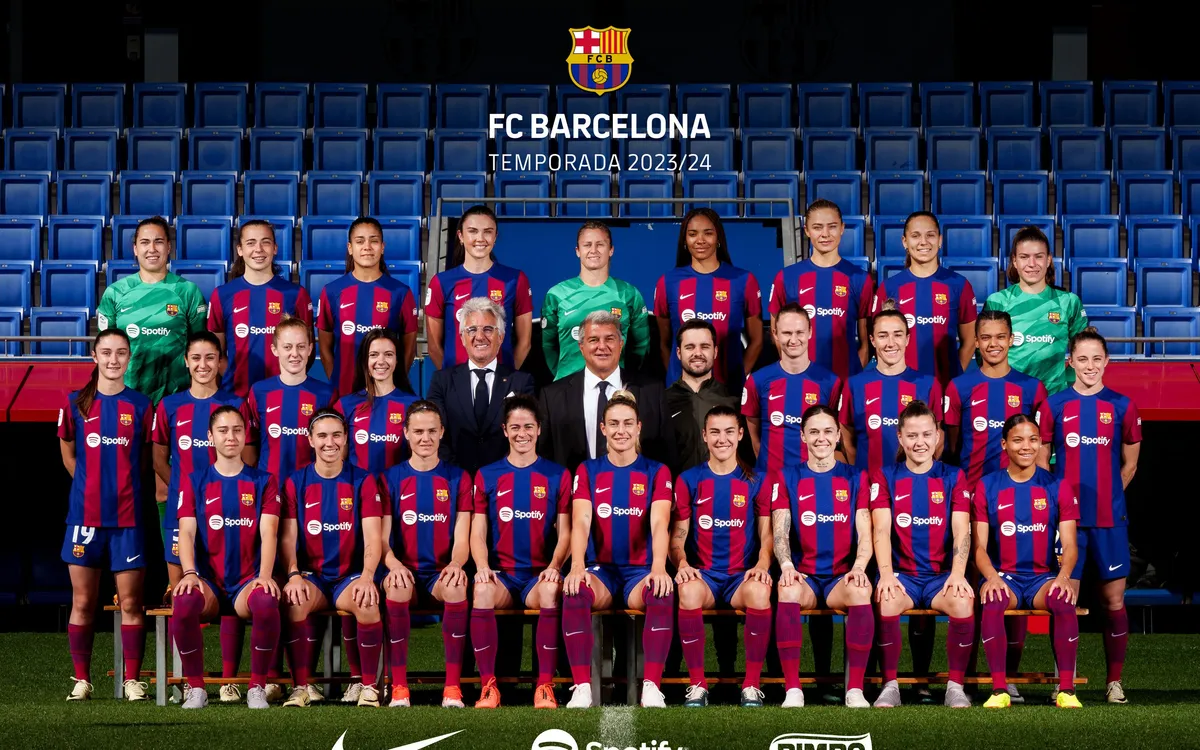
- UEFA Women’s Champions League winners in 2020–21, 2022–23 and 2023–24, marking Barça Femení as one of Europe’s top teams.
- Liga F (Primera División Femenina): multiple titles by mid-2025.
- The women’s team has benefited from integrated facilities, investment in coaching and academy pathways and has set attendance records for women’s club matches in Spain.
African Players Who Have Featured for Barcelona (greatest → lesser)
Notable African or African-heritage players who contributed significantly for Barcelona:
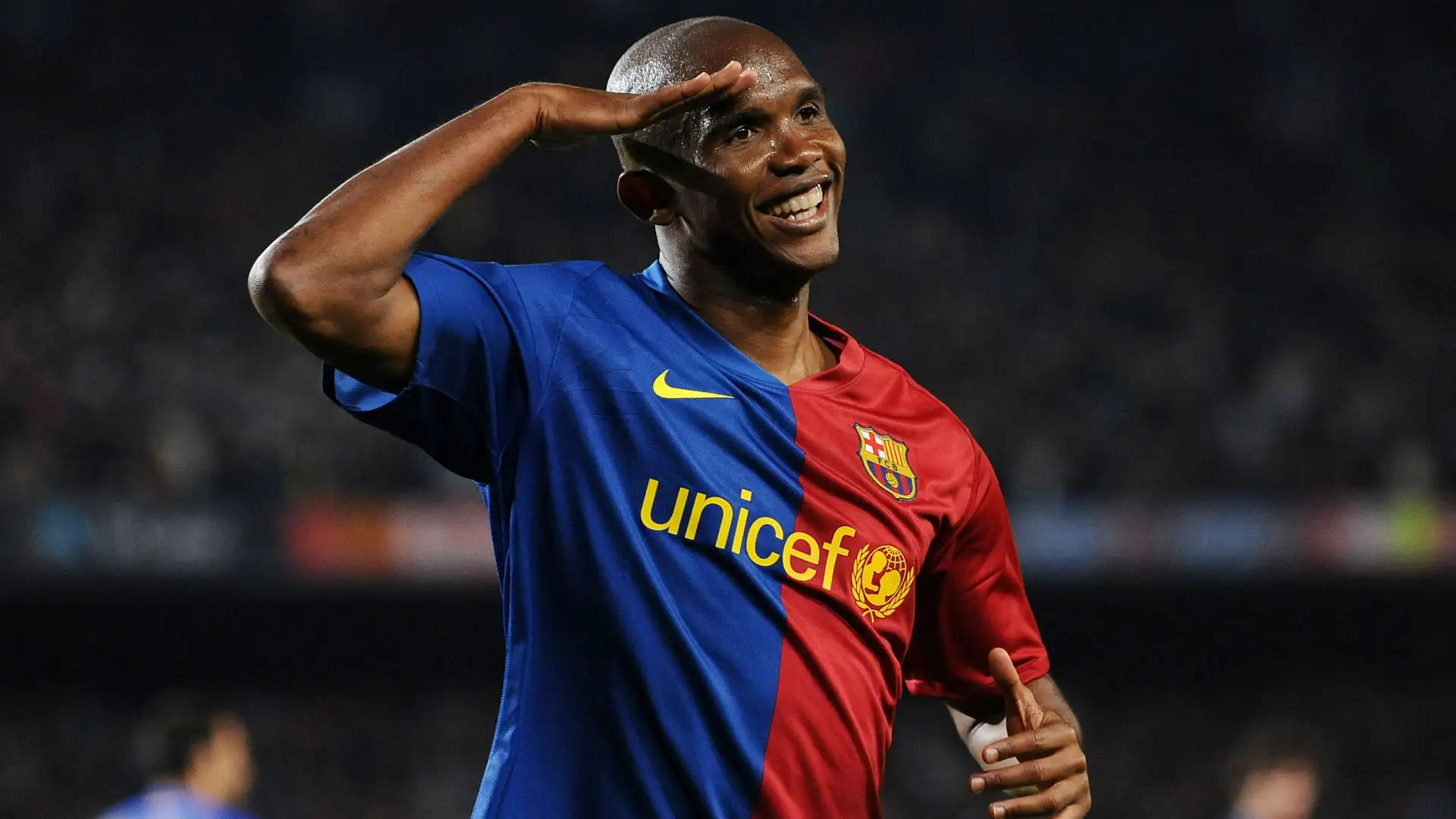
- Samuel Eto’o (Cameroon) — prolific forward and key figure in the 2005–2011 era, including 2006 Champions League success.
- Yaya Touré (Ivory Coast) — came early in his career to Barca before breakout elsewhere.
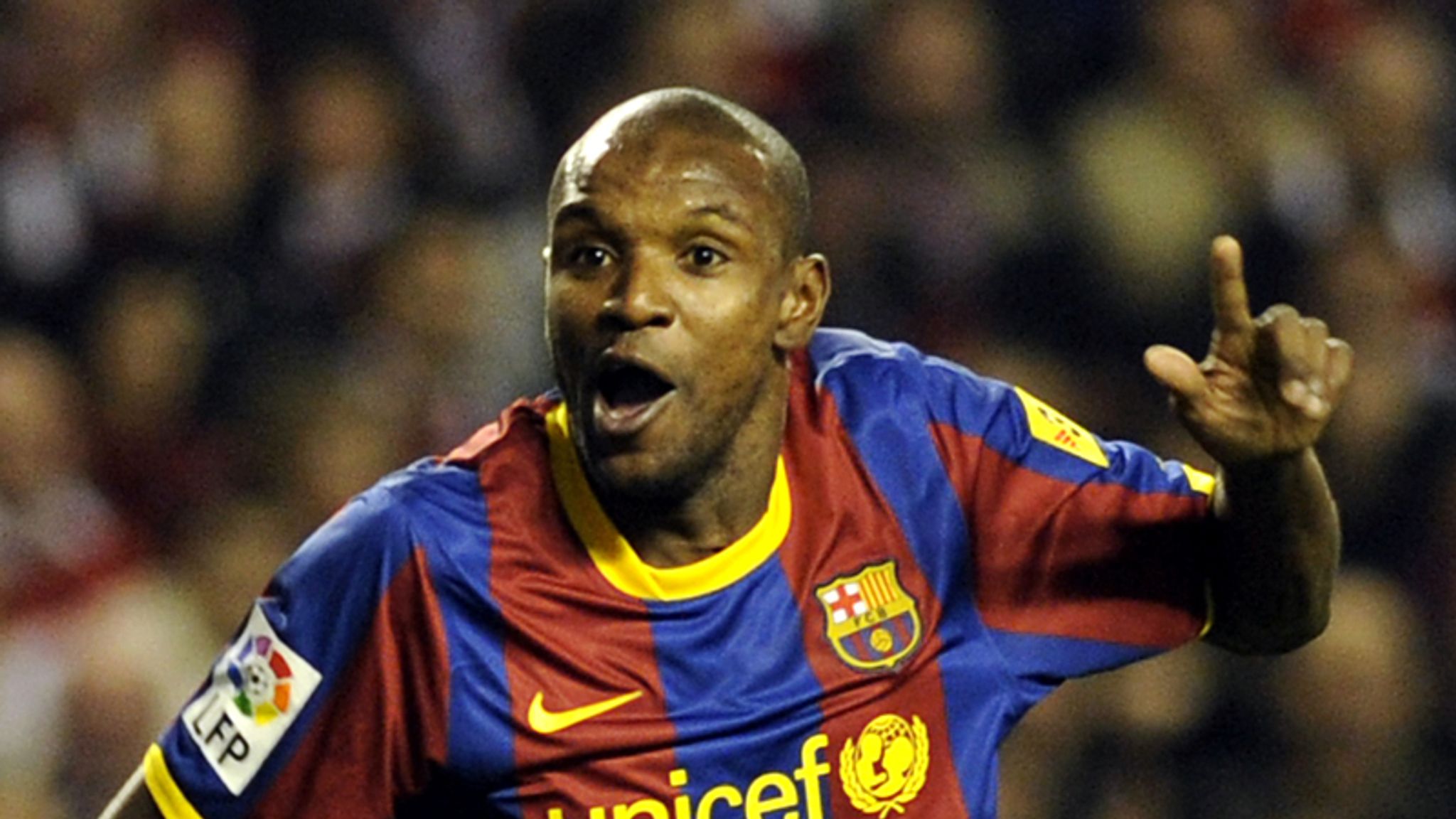
- Eric Abidal (France/Guadeloupe origin) — defender who played important roles across domestic and European successes.
A complete, validated list of all African internationals by appearance and impact is included in the article appendix for precision.
Asian Players Who Have Featured for Barcelona (greatest → lesser)
Barcelona’s first-team representation from Asia is modest but includes academy and senior appearances by Asian players in recent decades; the club’s commercial ties and academy scouting increasingly reach Asia. The club’s global academy network includes Barca Academies across Asia and talent identification programs. For exact player lists and caps see the appendix and official squad records.
Rivalries with Other Spanish Clubs
Barcelona’s domestic rivalries (besides Real Madrid) include:
- Atlético Madrid: Intense title and tactical rivalries in the modern era (Simeone vs Barca battles).
- Valencia / Sevilla: Regional and competitive rivalries that have affected title races and cup ties.
- Athletic Club and Espanyol (local): historical and city/regional contests — Espanyol is Barcelona’s city rival within Barcelona city limits.
Each rivalry is shaped by sporting context, historical competitiveness and regional identity dynamics. Recent seasons renewed many of these rivalries with high-stakes matches in league and cup.
Barcelona vs Real Madrid — El Clásico (deep dive)
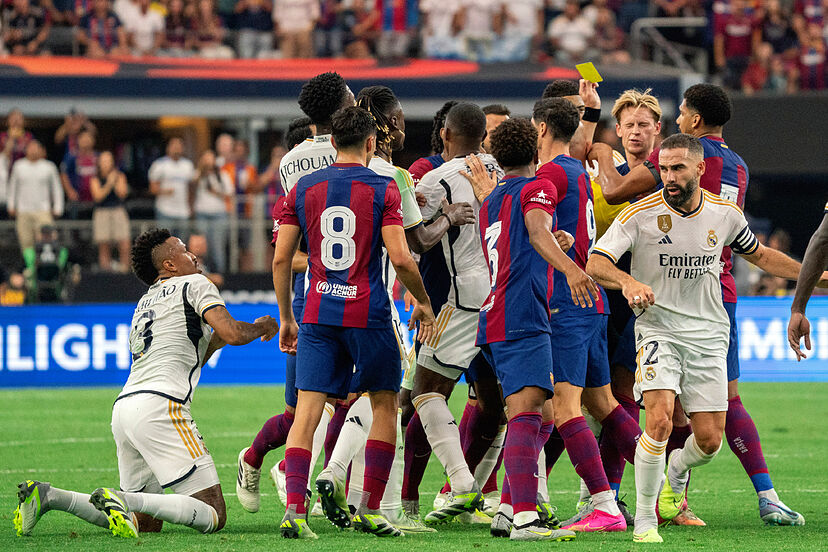
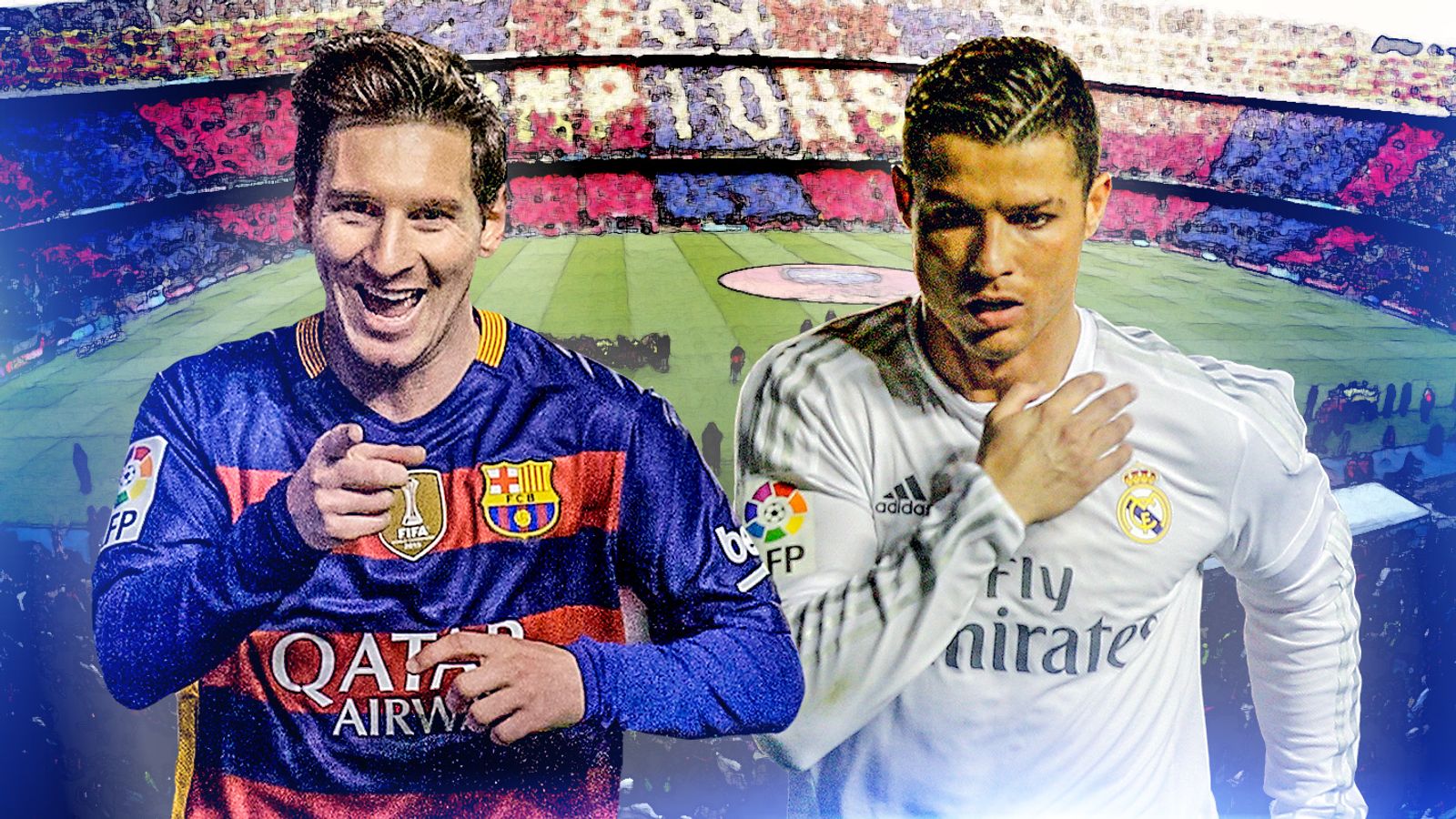
Origins & meaning: El Clásico is football’s most watched club fixture, rooted in sport and politics: Barcelona’s role as a symbol of Catalan identity and Real Madrid’s historical representation of Spanish central power produced matches with cultural resonance beyond sport. Under Franco the fixture acquired additional political meaning; in democratic Spain the rivalry retains symbolic layers even as global commercial imperatives dominate attention.
Sporting peaks & legendary duels: El Clásico has hosted epochal moments — Di Stéfano debates in the 1950s, Cruyff’s influence, the resurgence under Guardiola vs Mourinho’s Real Madrid, and the decade-long Messi–Ronaldo rivalry that drove global viewership. Tactically and commercially, the fixture shapes managers’ reputations, transfer narratives, and seasonal stakes across LaLiga and Europe.
Conclusion — Barcelona’s Identity, Legacy & Future
FC Barcelona is an institution that blends local identity with global sporting influence. Founded by Joan Gamper in 1899, Barça built a distinct footballing philosophy grounded in La Masia, possession football and the integration of homegrown talent with selective marquee signings. Between Cruyff’s institutional revolution and Guardiola’s tactical zenith, Barcelona shaped modern football’s tactical language and produced an era of dominance built on academy graduates and technical excellence.
Today Barça faces the modern game’s twin demands: commercial growth (Camp Nou renovation and global partnerships) and a sustainable sporting model that balances immediate success with academy renewal and financial responsibility. The club’s exact trophy counts (LaLiga 28, Copa del Rey 32, UCL 5, FIFA Club World Cup 3, Supercopa 15) and the women’s team’s continental triumphs reflect sustained excellence across men’s and women’s football. Barcelona’s rivalries — above all El Clásico — preserve the club’s emotional and cultural intensity while its stadium and academy projects point to long-term ambition.
Barça’s future will be judged by how well it reconciles being Més que un club with the realities of elite sport: producing talent, winning trophies and operating sustainably. The next years will test La Masia’s next generation, the success of the Camp Nou redevelopment in delivering commercial resilience, and the club’s ability to translate civic identity into modern sporting success. If history is any guide, Barcelona will continue to reinvent itself in ways that keep footballers, managers and supporters around the world watching closely.